We need to have an honest conversation about money, marketing, and the traditional jewelry industry.
For almost a century, a brilliantly orchestrated marketing campaign convinced millions of people that spending two months' salary on a piece of mined carbon was not just a romantic requirement, but a financial investment.
Fast forward to 2026. Today’s buyers are highly educated, financially savvy, and practically immune to outdated guilt trips. They are looking at the math behind natural diamonds, and they are realizing something shocking: Buying a mined diamond at retail price is one of the worst financial decisions you can make.
If you are currently shopping for an engagement ring, put down the credit card. Here is the exact financial breakdown of why a natural diamond is no longer the flex it used to be—and why choosing a lab-grown diamond from Moisora is the ultimate power move.
1. The "Investment" Myth and the Drive-Off-The-Lot Effect

Traditional jewelers love to use the word "heirloom" and "investment" when pushing a $15,000 natural diamond.
Here is the reality: A retail engagement ring is not a liquid asset. Much like buying a brand-new luxury car, a mined diamond experiences massive, immediate depreciation the exact second you walk out of the store. Why? Because you aren't just paying for the stone; you are paying the "retail markup." You are paying for the jeweler's mall rent, their inventory insurance, and the salesperson's commission.
If you buy a $15,000 natural diamond today and try to sell it back to a jeweler tomorrow, you will likely be offered $4,000 to $6,000. You instantly lose roughly 60% of your equity. That is not an investment; that is a sunk cost.
2. You Are Paying a "Mining Tax" for the Exact Same Science

In the past, jewelers could argue that natural diamonds were the only option for true brilliance and hardness. Science has permanently closed that gap.
Lab-grown diamonds are not "fakes" or "simulants" like Cubic Zirconia. They are optically, chemically, and physically identical to mined diamonds. They are pure, crystallized carbon. Even a master gemologist looking through a microscope cannot tell the difference, because there is no difference.
The only distinction is the origin. One was pulled out of a massive hole in the earth using heavy machinery; the other was grown in a highly controlled, technologically advanced laboratory environment (using either CVD or HPHT methods).
When you buy a natural diamond, you are essentially paying a massive premium—a "mining tax"—simply for the story of how it was extracted, while getting a stone that looks identical to a lab-grown diamond.
3. The Opportunity Cost of the "Status Quo"

Let’s look at the actual numbers in 2026.
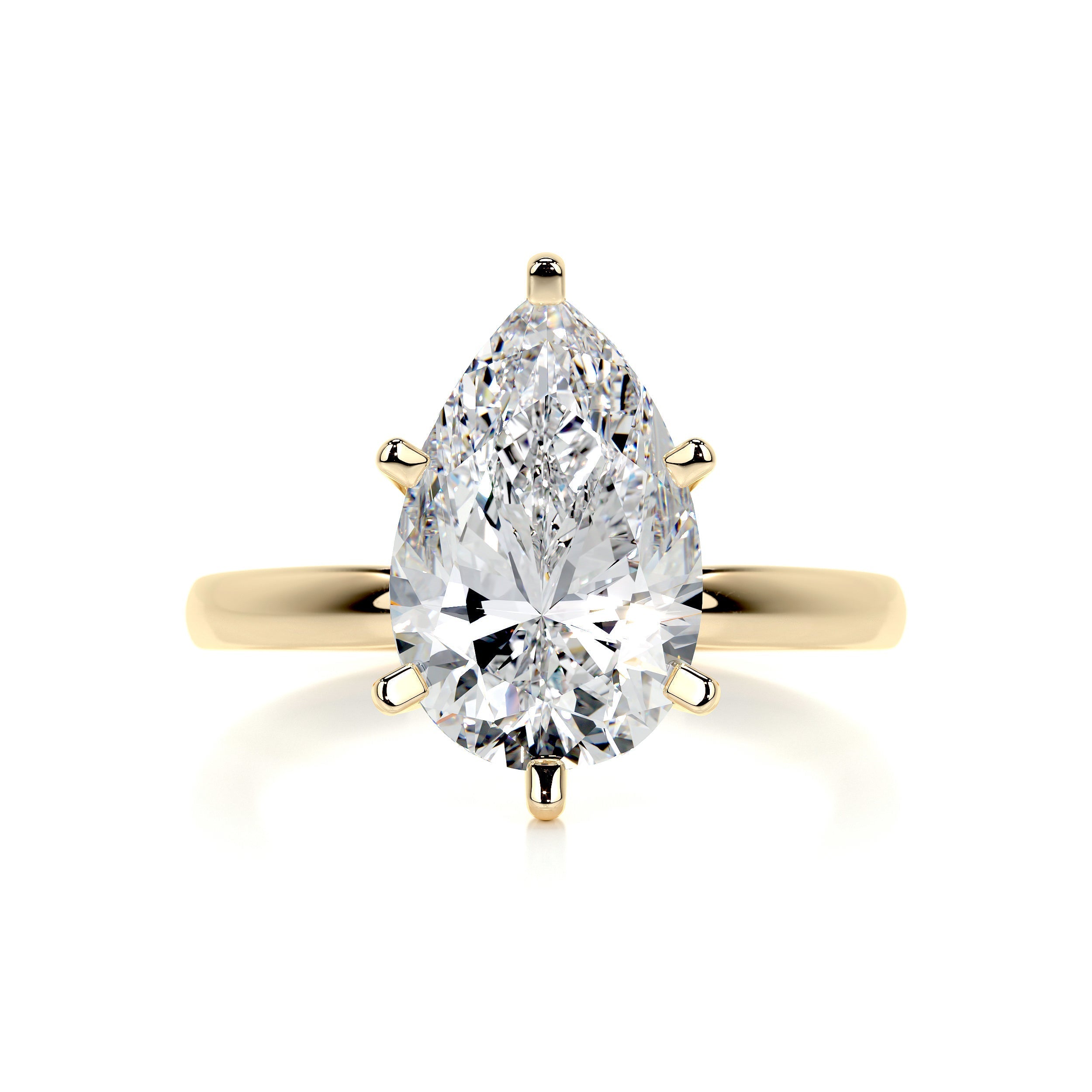
Let's say your partner’s dream ring is a flawless, Excellent-cut, 3-carat Oval diamond.
-
The Moisora Route: An identical, IGI-certified 3-carat lab-grown diamond from Moisora costs a fraction of that—often under $3,000 to $5,000.
What is the opportunity cost of choosing the mined stone? It’s $30,000.
That $30,000 difference is a down payment on a house. It’s a fully funded dream wedding. It’s an aggressive investment in an index fund or a stock portfolio that will actually yield a return over the next 30 years. Savvy couples in 2026 understand that tying up tens of thousands of dollars in a depreciating rock is bad financial planning.
4. The Shifting Definition of "Luxury"

In the 1990s, luxury meant exclusivity and high price tags. Today, the definition of luxury has evolved.
Modern luxury is about conscious consumption, transparency, and getting exactly what you want without being exploited. Wearing a massive, flawless lab-grown diamond doesn't mean you "cheated" the system—it means you beat the system. It signals that you are smart enough to secure a larger, higher-clarity, conflict-free stone without sacrificing your financial future.
Furthermore, lab-grown diamonds offer complete ethical peace of mind. There is zero risk of funding conflict, and the environmental footprint of moving thousands of tons of earth is completely eliminated.
The Smart Buyer’s Choice: Moisora
The secret is out, and the jewelry industry is scrambling to adapt. But you don't have to play their game.
At Moisora, we built our brand for the modern, educated buyer. We strip away the unnecessary markups, the outdated sales tactics, and the artificial scarcity of the mined diamond market. We offer premium, certified lab-grown diamonds and moissanite directly to you, ensuring that every dollar you spend goes directly into the size, cut, and brilliance of your stone—not a jeweler’s overhead.
Stop paying for a marketing campaign from 1947. Make a choice that your partner, and your bank account, will thank you for in 2026.
Ready to maximize your budget and design a ring that defies expectations?