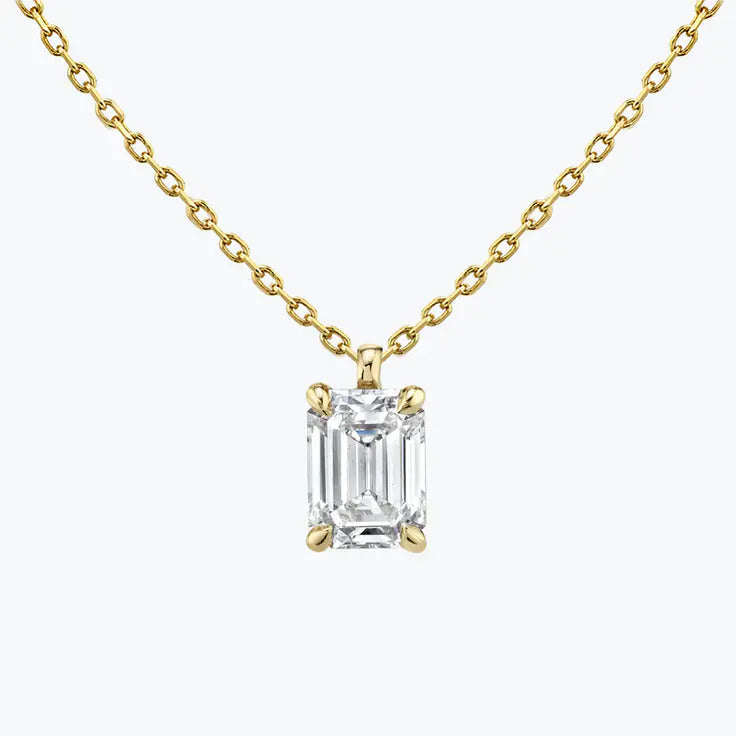
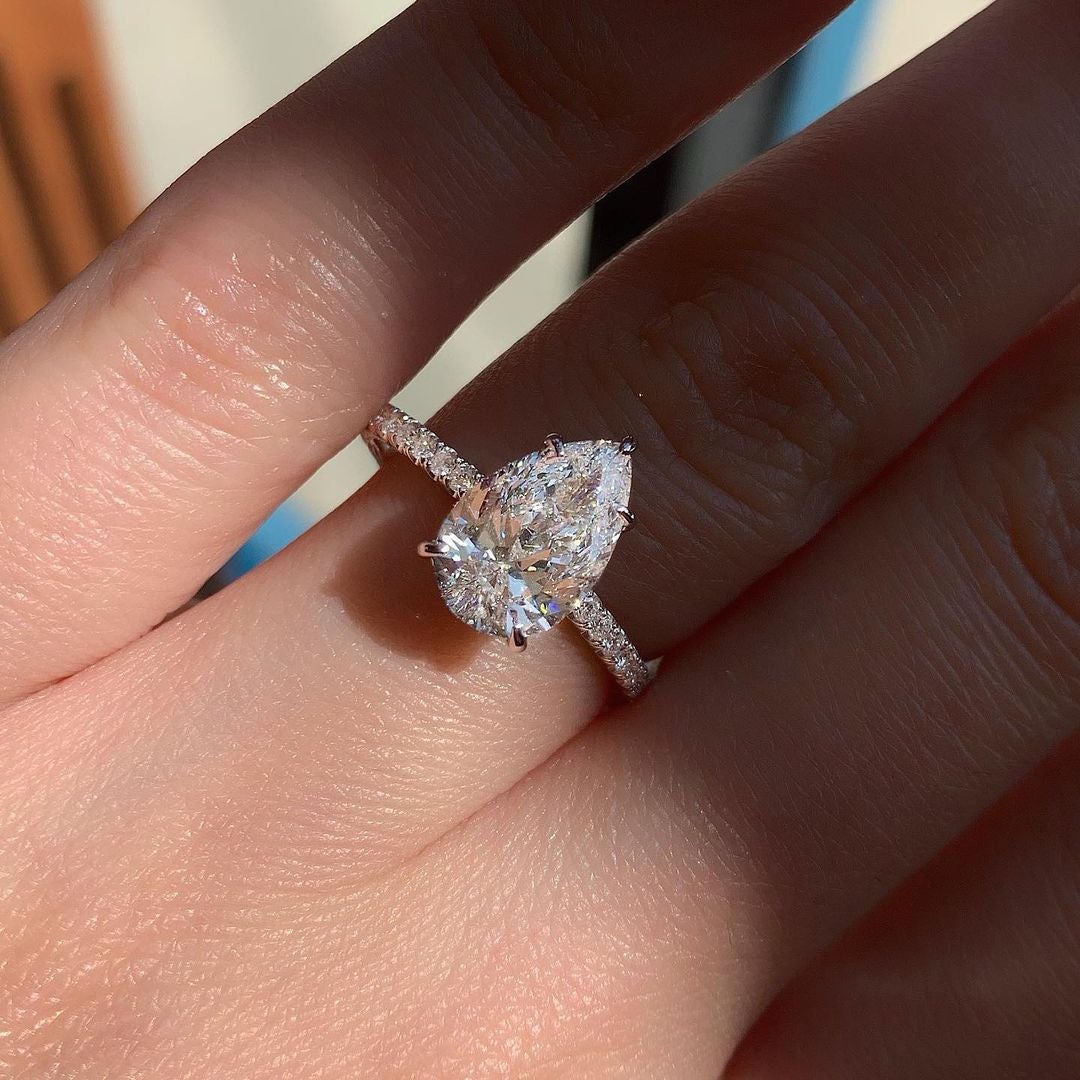
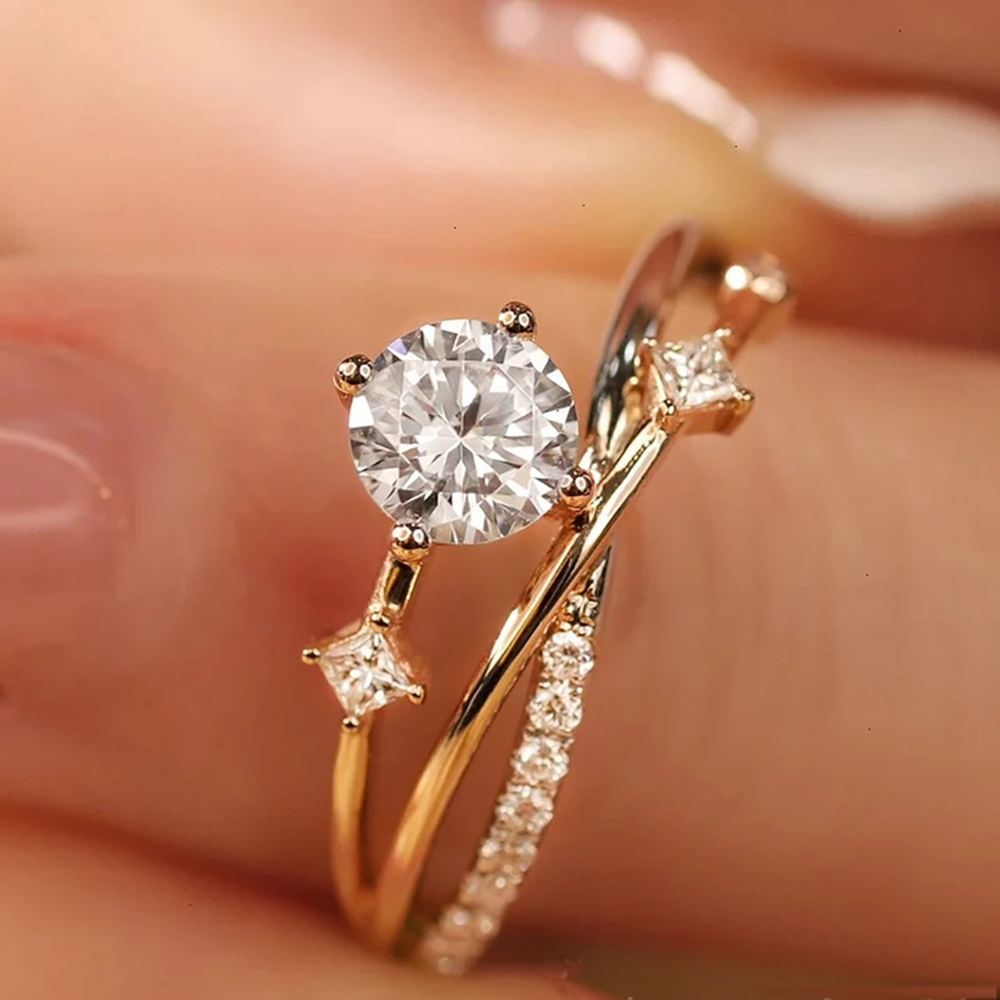
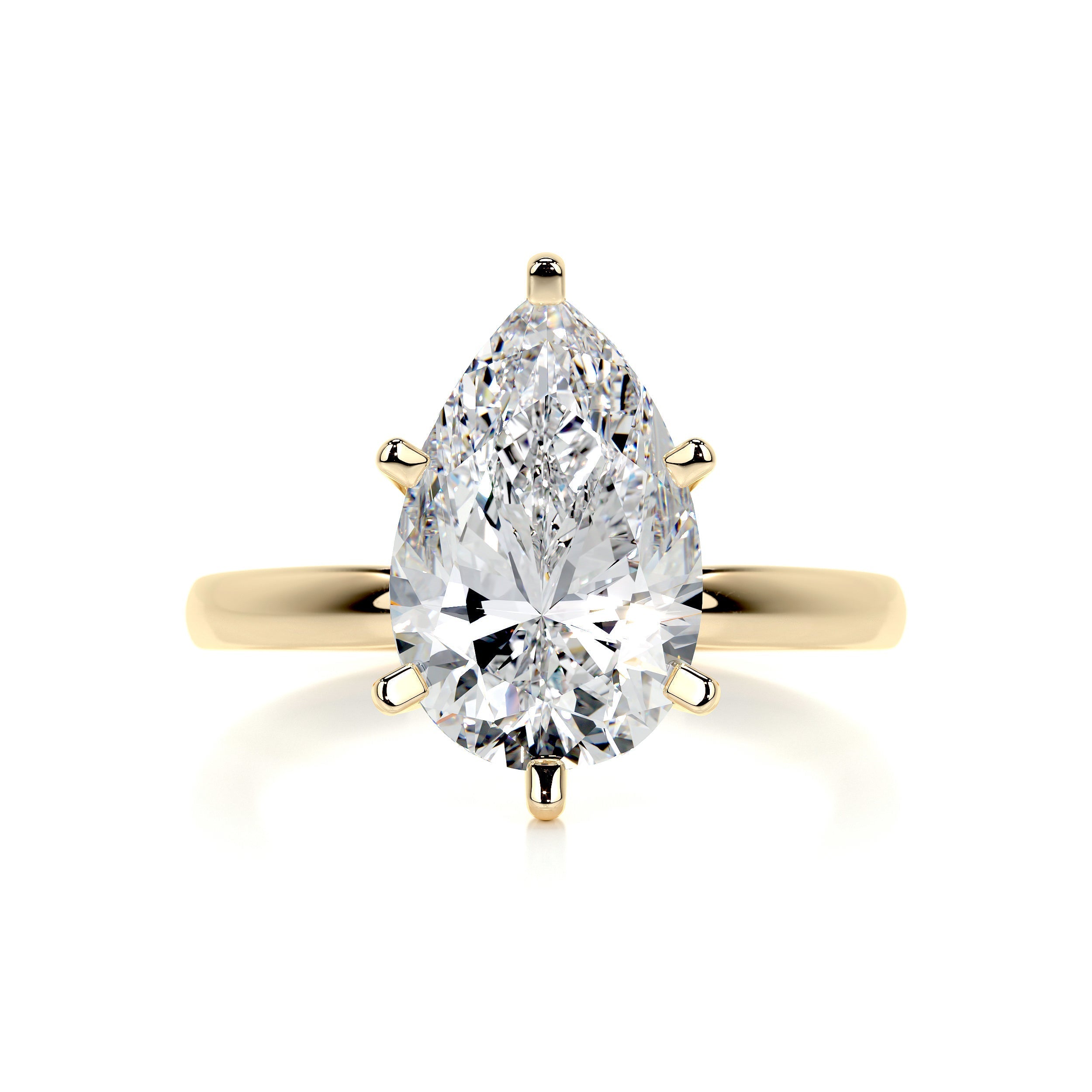
Let’s talk about the elephant in the room—or rather, the massive rock on your finger.
Thanks to the rise of premium lab-grown diamonds from brands like Moisora, couples in 2026 are no longer restricted by the artificial price inflation of the mined diamond industry. A flawless, 4-carat Oval or Emerald cut is now completely within reach.
But this new era of massive diamonds has created a hidden, frustrating problem that traditional jewelers aren't warning you about: Ring Fatigue.
You see it perfectly posed on Instagram. But in reality? That massive rock is top-heavy. It constantly spins upside down. It snags on your favorite sweaters. You accidentally smack it against car doors and desk edges. By the end of the day, your finger actually aches from the awkward weight distribution.
If your dream is to rock a 3-carat, 4-carat, or even 5-carat lab-grown diamond, you absolutely can—but you cannot put it in a standard, cheap setting. Here is the architectural truth about why large rings fail, and the specific Moisora settings you need to wear a massive diamond comfortably every single day.

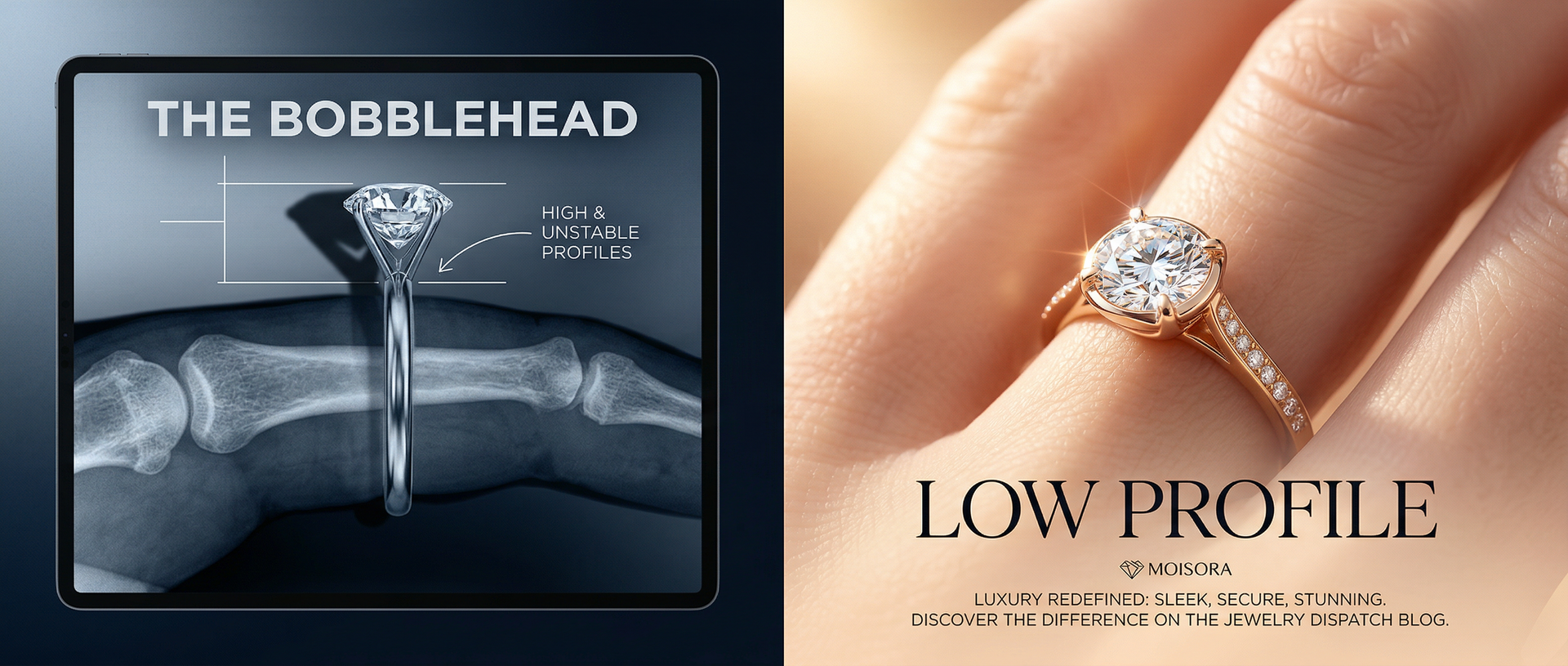
The Problem: The "Bobblehead" Effect
Physics doesn't care how beautiful your diamond is.
When you take a heavy, 4-carat stone and mount it high up in the air on a whisper-thin 1.5mm band, you create what jewelers call the "Bobblehead Effect." All the weight is concentrated at the very top. Because your finger isn't perfectly round (fingers are wider at the base and slightly flatter on top), gravity takes over. The heaviest part of the ring will inevitably pull downward, causing the diamond to constantly spin to the inside of your palm.
Not only is this incredibly annoying, but constantly pushing the ring back into place causes friction, leading to blisters and "ring fatigue."
The Danger: Snags, Smacks, and Lost Stones
The spinning is just the beginning. The traditional "Peg Head" setting—where the diamond sits high above the band like a trophy—is a structural nightmare for large stones.
When a 4-carat diamond sits 8mm or 9mm off your finger, it becomes a target. You will knock it against doorframes. You will catch it on your hair. You will snag it on knit blankets. Every single time you accidentally hit that high-set diamond, you are bending the prongs by a microscopic fraction. Over time, those prongs loosen, putting your stunning Moisora diamond at risk of falling out entirely.

The Moisora Solution: Architectural Engineering
The answer is not to buy a smaller diamond. The answer is to buy a smarter setting.
If you are investing in a large lab-grown diamond, you need a setting that is architecturally engineered to handle the carat weight. At Moisora, we specialize in designs that provide maximum security and comfort without sacrificing the "floating" aesthetic you love.
Here are the 3 mandatory rules for wearing a massive diamond comfortably:
1. Demand a Low-Profile Setting
This is the golden rule of big diamonds. A low-profile setting drops the "culet" (the pointy bottom of the diamond) as close to your finger as physically possible.

2. The 2.0mm Band Minimum
The "whisper-thin" 1.5mm band trend is beautiful for a 1-carat stone, but it is a structural disaster for a 4-carat stone. The band acts as the foundation of a house. You wouldn't build a mansion on a toothpick.
-
The Benefit: Bumping your band width up to 1.8mm or 2.0mm provides the necessary surface area to grip your finger and counteract the weight of the stone. Visually, a 2.0mm band still looks incredibly dainty next to a massive rock, but it provides 10x the structural integrity.
3. Cathedral Shoulders & The Hidden Halo
If you want a massive rock, you need a setting that supports it from multiple angles, not just four flimsy prongs holding it from the bottom.
-
The Benefit: A "Cathedral" setting uses elegant arches of metal that slope up from the band to brace the sides of the diamond. Adding a "Hidden Halo" (a wrap of tiny diamonds around the base of the center stone) acts like a belt, locking the prongs in place so they cannot bend or warp if you bump the ring.

Don't Sacrifice Size. Upgrade Your Setting.
You shouldn't have to choose between the jaw-dropping 4-carat lab-grown diamond of your dreams and the ability to comfortably use your left hand.
At Moisora, we believe luxury is in the details. Our settings are meticulously engineered to perfectly balance your chosen carat weight, ensuring your ring stays face-up, secure, and incredibly comfortable from the moment you put it on until forever.
Stop settling for poorly designed, top-heavy rings.
Ready to find a massive lab-grown diamond engineered for real life?